
Jackson County Criminal Court Cases
Jackson County sits in Florida's Fourteenth Judicial Circuit. Circuit Court hears felony cases, while County Court handles misdemeanors and county-level criminal or traffic matters. Florida has no current municipal criminal-court tier. A case that begins with a Marianna, Graceville, or Malone police contact therefore reaches the Jackson County Clerk if prosecutors file charges. It does not stay in a separate city criminal docket.
The clerk is the constitutional keeper of both Circuit and County Court files. That makes the clerk, rather than the jail, the right office for a docket, filed information, order, judgment, sentence, or certified copy. The jail can confirm custody, and an arresting agency can provide its report, but neither source establishes the final court outcome. Jackson County criminal case numbers and the court division help keep those sources tied to the same proceeding.
Jackson County Felony and Misdemeanor Files
The court level signals the type of Jackson County criminal case. Felony prosecutions belong in Circuit Court. Misdemeanors generally belong in County Court. A charge shown at booking may change after the State Attorney reviews the facts, files an information, seeks an indictment, or declines to prosecute. The filed court count is thus more useful than the arrest label when the question is what Florida actually prosecuted.
City boundaries do not create a different trial-court repository. Reports remain with the agency that wrote them, but filed charges move to the county court system. This split often trips up searchers. A Marianna Police report and a Jackson County docket can describe the same event while using different record numbers and charge wording.
Searching Jackson County Case Records
Begin at the Clerk's Search Court Records page, which routes public users to the CiviTek county gateway. Public anonymous access is the baseline. Attorney, Registered User, and Party Access options require credentials and may expose information according to authorization. The clerk warns that the online index is not the official record, so use it to locate a case and then obtain the needed court document.
- Choose Public access at the Jackson County CiviTek gateway.
- Enter a case number when one is known.
- Otherwise combine party name, criminal case type, and a date range.
- Compare the filing date, court, counts, and status before accepting a match.
- Ask the clerk for a paper, imaged, or certified copy when the public view is incomplete.
The portal controls documented for Jackson County support the following search plan. Inner options can change, so do not assume a dropdown value that the public gateway does not display.
| Search control | Best use |
|---|---|
| Case number | The strongest unique key when its format is known |
| Party or last name | A broad start that requires identity checks |
| First name | Narrows common surnames |
| Court or case type | Limits results to the criminal docket when offered |
| Date range | Separates similar names and helps with older filings |
Jackson County Online Index Limits
An empty Jackson County criminal court search is not proof that no case exists. The clerk expressly states that cases with an active warrant or capias are not viewable online. A capias is a court writ directing that a person be taken into custody. Unexecuted warrant material can also be restricted under Florida court rules and the active-investigative exemption.
Older files may be paper, archived, not imaged, sealed, or subject to a retention schedule. Ask the clerk which description applies. Florida's Appellate Case Information System covers Supreme Court and District Court of Appeal matters, not Jackson County trial cases. Likewise, the statewide E-Filing Portal serves filing and authorized access; it directs ordinary public searchers back to the county clerk.
Inside a Jackson County Case File
A Jackson County criminal case file is event-centered. It connects the filed counts with the people, hearings, documents, rulings, financial entries, and final outcome. Public views may omit protected identifiers or documents that are sealed or not imaged. Read the docket in sequence rather than relying on the first charge line.
| Case Header | Case number, filing date, court or division, case type, judge, status |
|---|---|
| Parties | Defendant, State of Florida, and attorneys where public |
| Counts | Charge description or statute, degree, filing reference, status, disposition |
| Docket Events | Filings, first appearance, arraignment, pleas, motions, hearings, judgment, sentence |
| Documents | Docket-linked images when public; clerk handling for protected or non-imaged items |
| Hearings | Date, time, type, judge, and courtroom when scheduled |
| Financial Entries | Assessments, payments, balances, fines, costs, or restitution when public |
| Redactions | Protected victim or minor data, financial identifiers, Social Security numbers, sealed facts |
Reading Jackson County Dispositions
Disposition language answers what happened to each count. “Nolle prosequi” means the prosecutor chose not to proceed on that charge. A dismissal ends the count without a conviction. An acquittal is a not-guilty result after adjudication. A conviction is a judgment of guilt. A Florida “withhold of adjudication” is not a dismissal; the court withholds formal adjudication after a plea or finding, and the result can still matter under Florida sealing and expungement law.
- Information
- The charging document filed by the prosecutor.
- Docket
- The dated list of events in the court file.
- Disposition
- The outcome recorded for a count or case.
- Sentence
- The consequence ordered after the court's judgment.
Compare each count separately. One Jackson County case can contain a dismissed count, a plea on another count, and a sentence tied only to the surviving offense. The broader Jackson County arrest lookup may still show the original booking charge, which is why both records must be reconciled.
How a Jackson County Case Moves
A Jackson County prosecution may start with arrest or a notice to appear. First appearance addresses custody and release. The State Attorney then reviews the referral and may file an information, seek an indictment, or decline. Arraignment records the plea. Discovery, motions, negotiations, and hearings follow before trial or a negotiated plea. The court then enters the disposition and, when appropriate, a sentence.
Case flow: Charges Filed › Arraignment › Pretrial › Plea or Trial › Disposition › Sentencing
Post-judgment motions and appeal can extend the file. The arrest charge may differ from the filed information, and a later order can change the status shown on an older printout. Date-stamped copies are useful when timing matters.
Jackson County Clerk Copy Options
The clerk's counter is at 4445 Lafayette Street, Marianna, Florida 32446. The mailing address is P.O. Drawer 510, Marianna, FL 32447. Call (850) 482-9552; traffic matters use (850) 482-9699. Published hours are Monday through Friday, 8:00 a.m. to 4:30 p.m., excluding holidays. Identify the case number, year, party, and exact document when seeking an older or non-imaged file.
Jackson County e-certified court records may be ordered by phone, at the counter, or through Clerk E-Certify. The clerk describes these records as cryptographically signed, tamperproof, and indefinitely valid. A printed copy includes a QR code that points back to the repository original for comparison. Confirm the current plain-copy or certified-copy fee before ordering because the research did not verify a current court fee schedule.
The clerk's court-services page explains the local distinction between court and official records.
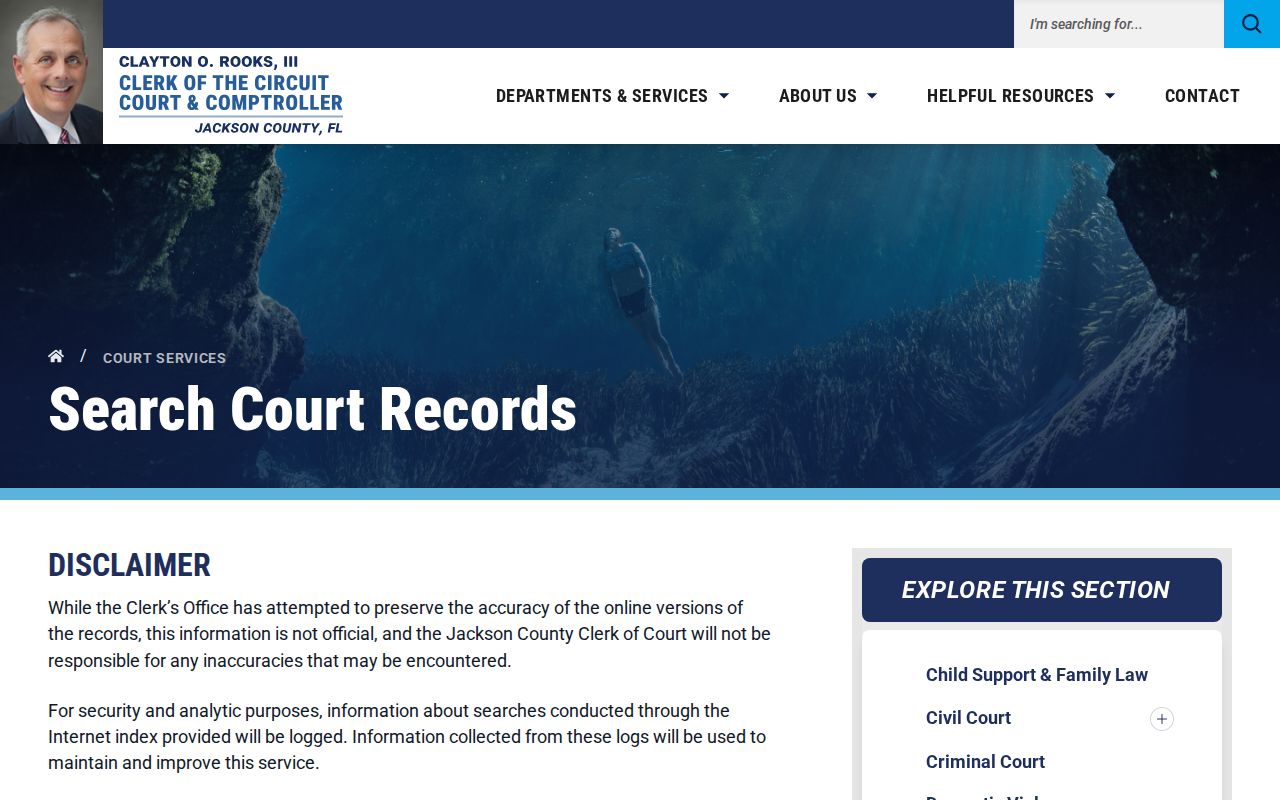
Court records arise from a judicial case. Official records include deeds, liens, mortgages, plats, marriage licenses, and recorded judgments. Choosing the wrong search can make a valid Jackson County case appear missing.
Case Record Access and Restrictions
Florida Constitution article I, section 24 and Florida Statutes section 119.07 support inspection and copying of public records. Yet access has defined limits. Section 119.071 protects active criminal intelligence, active investigative information, and specified victim or personal data. Juvenile files, sealed or expunged material, sensitive identifiers, and protected portions of a mixed document may be hidden or redacted.
A custodian should release the nonexempt remainder when possible and identify the legal basis for withholding material. For a publicly displayed Social Security number or full bank or card number, the clerk accepts a written redaction request by mail, fax, electronic transmission, or in person. The request should identify the case number, document title, and page. The clerk states there is no fee for that redaction request.
For an authoritative Jackson County criminal court record, obtain the filed document or certification from the clerk. A portal summary is a finding aid. It is not a substitute for the official file, and it should not be read as proof about facts beyond the court's recorded action.
Jackson County Federal Case Boundary
Federal charges are not filed in the Jackson County court system. Jackson County lies in the Northern District of Florida's Panama City Division. The federal court currently marks the Panama City courthouse closed until further notice, so an in-person visitor should verify the correct location before travel. PACER provides federal dockets and documents after account registration.
The Northern District of Florida source shows the separate federal route.
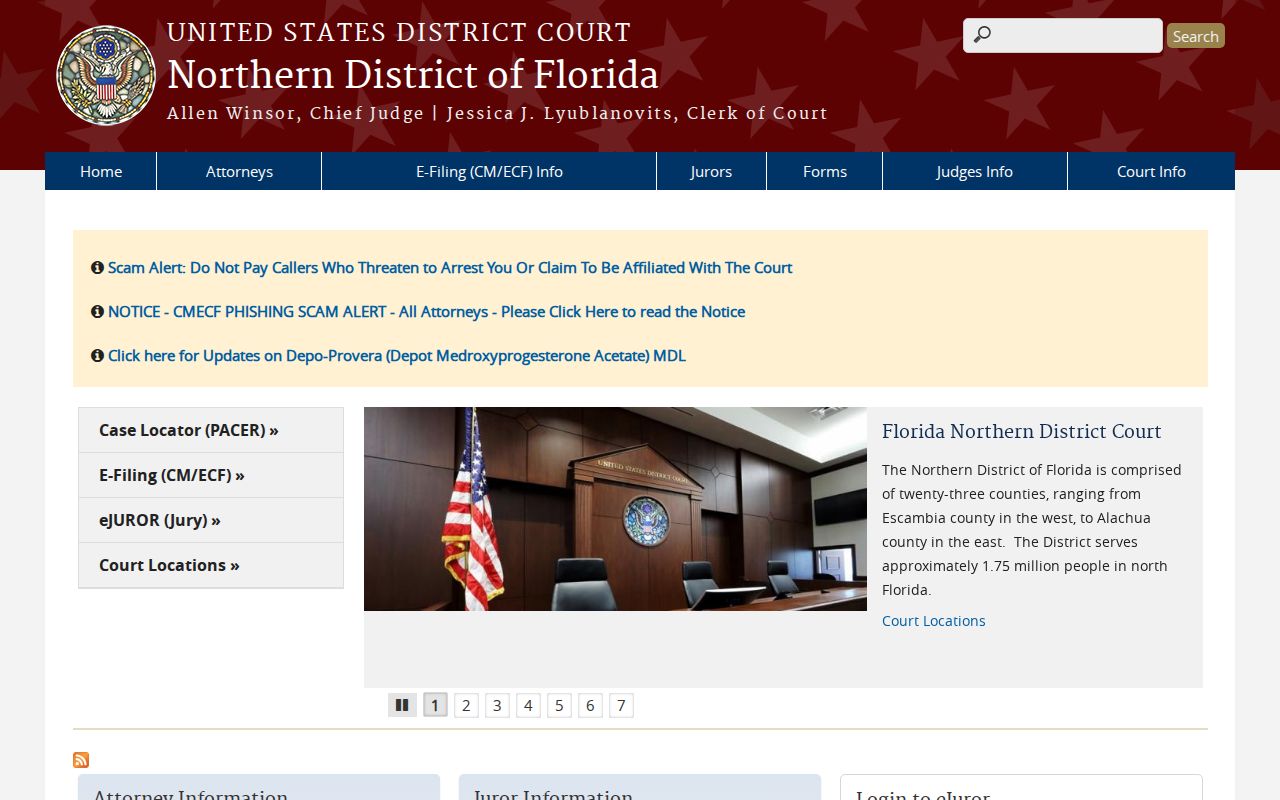
This federal layer should be checked only when the matter was prosecuted by the United States, not as a replacement for the Jackson Clerk.
The PACER source illustrates the federal docket access system.
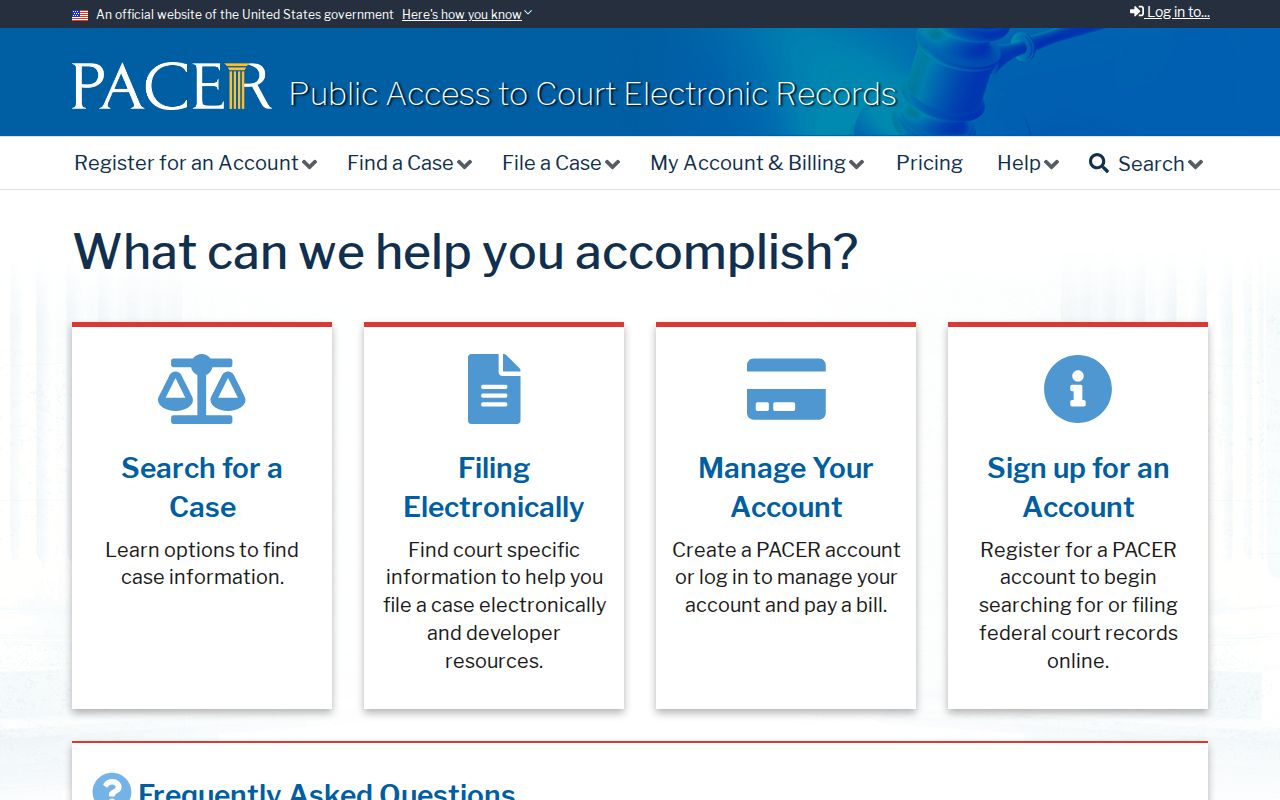
PACER and the Northern District remain distinct from Jackson County Circuit and County Court files.
The local Jackson court-search source shows the correct county starting point.
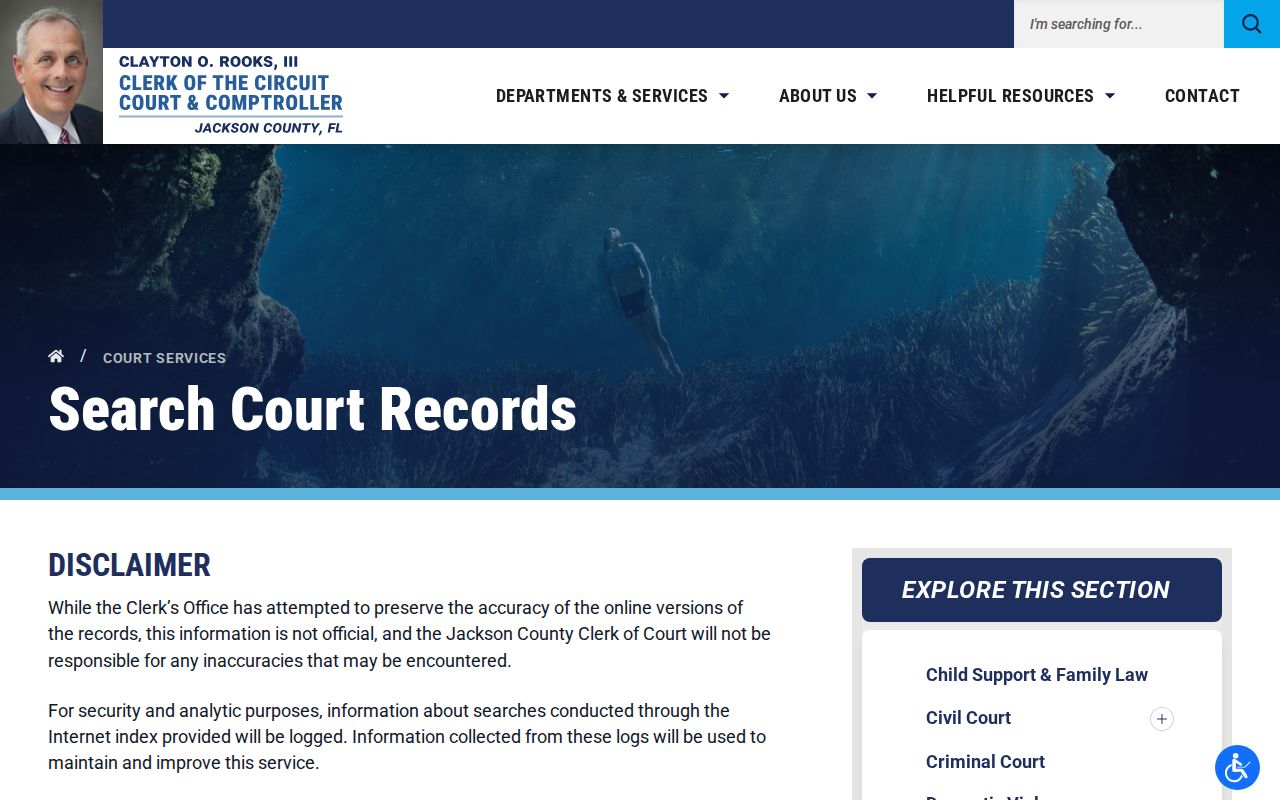
Its index locates local cases, while the clerk's copies provide the official court record.
Florida's seal and expunge source explains why qualifying records can leave public view.
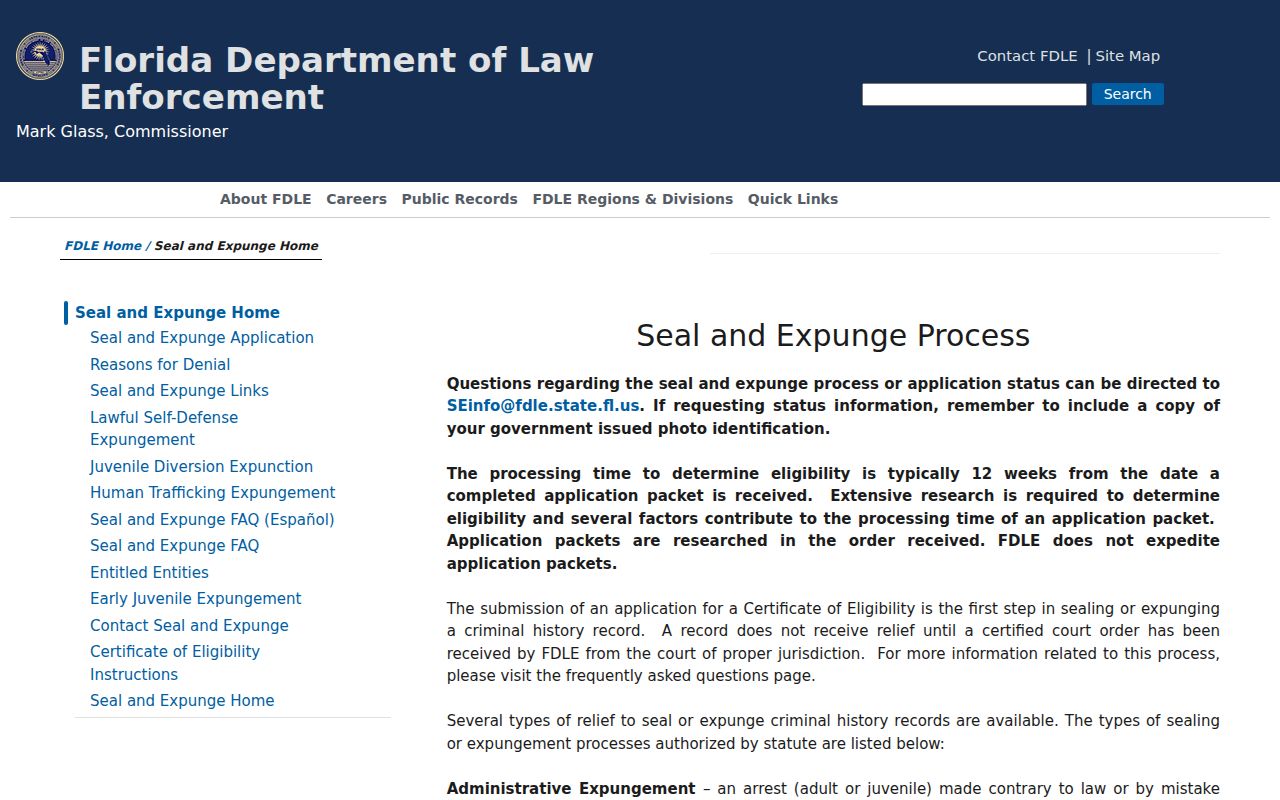
FDLE issues eligibility certificates, but the court decides a petition to seal or expunge.