
Sex Offender Checks in Jackson County
The Florida Sexual Offender and Predator Registry is the main public channel. FDLE keeps the statewide index, while the Jackson County Sheriff's Office performs local registration work and supplies information to the state. Start with FDLE to locate a person, inspect a reported address, or search around a place. Use a legal name and other known facts because two people can share a name.
The sheriff can answer local questions at (850) 482-9624. No fixed Jackson County registration-counter schedule was verified, so call before going. A Clerk case file is the better source for a qualifying conviction, disposition, and sentence because a registry entry is not a complete rap sheet.
A search can also fail for ordinary reasons. Spelling, an alias, a recent move, or a different address type can affect the result. Widen the name fields, remove a narrow place filter, and check neighboring counties before concluding that no public profile exists. If identity remains uncertain, use the agency contact rather than sharing an unverified match. That approach respects both public safety and the serious harm caused by confusing two people.
Filter Jackson County Registry Results
FDLE provides person, neighborhood, campus, and internet-identifier searches. A county filter is useful, yet it should not be the only attempt. A person may report an address in a nearby county, be held elsewhere, or appear as absconded. Try a name search too. Compare the photograph, aliases, birth facts, description, and offense before deciding that a result is the right person.
The official FDLE neighborhood-search page shows the place-based route.
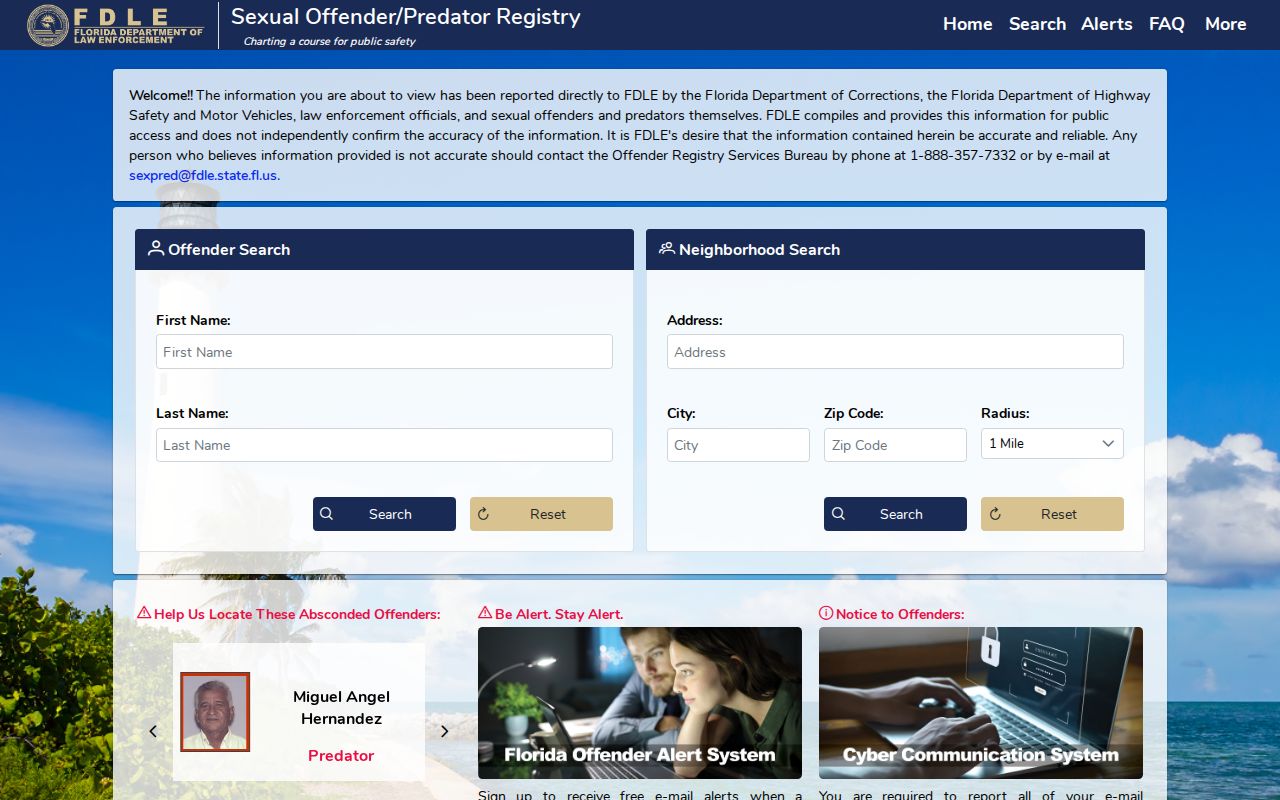
That screen is useful for address awareness, but a map point is not proof of a violation or a prediction of harm.
How to Search the Florida Registry
FDLE's search begins with terms of use and offers several paths to Jackson County sex offender records. Read the live labels because controls can change. A name query is best when the person is known. Neighborhood mode answers a place question. Campus mode checks reported ties to a school or college, while internet-identifier mode concerns reported online identities. Results from one mode should be checked in the full profile before being printed or shared.
- Open the official registry and read its conditions.
- Choose a person, neighborhood, campus, or identifier search.
- Enter a name or select Jackson County and useful place filters.
- Open the full profile and compare several identifiers.
| Field Label | Type | Required | Notes |
|---|---|---|---|
| Name | Text | Person mode | Middle name helps narrow results. |
| City, ZIP, county | Text/select | No | Select Jackson for county results. |
| Address and radius | Place search | Neighborhood mode | Searches around a location. |
| Campus | Campus search | Campus mode | Checks reported school links. |
| Internet identifier | Text | Identifier mode | Uses a reported online identity. |
Jackson County Offender Alerts
FDLE lets a user save a Florida location for alerts. This is more practical than repeating the same Jackson County offender search. A notice means registry information changed near that place. It does not measure conduct or risk. Review the profile's address type, status, and verification facts after an alert arrives.
The FDLE registry FAQ explains alerts, flyers, and corrections.
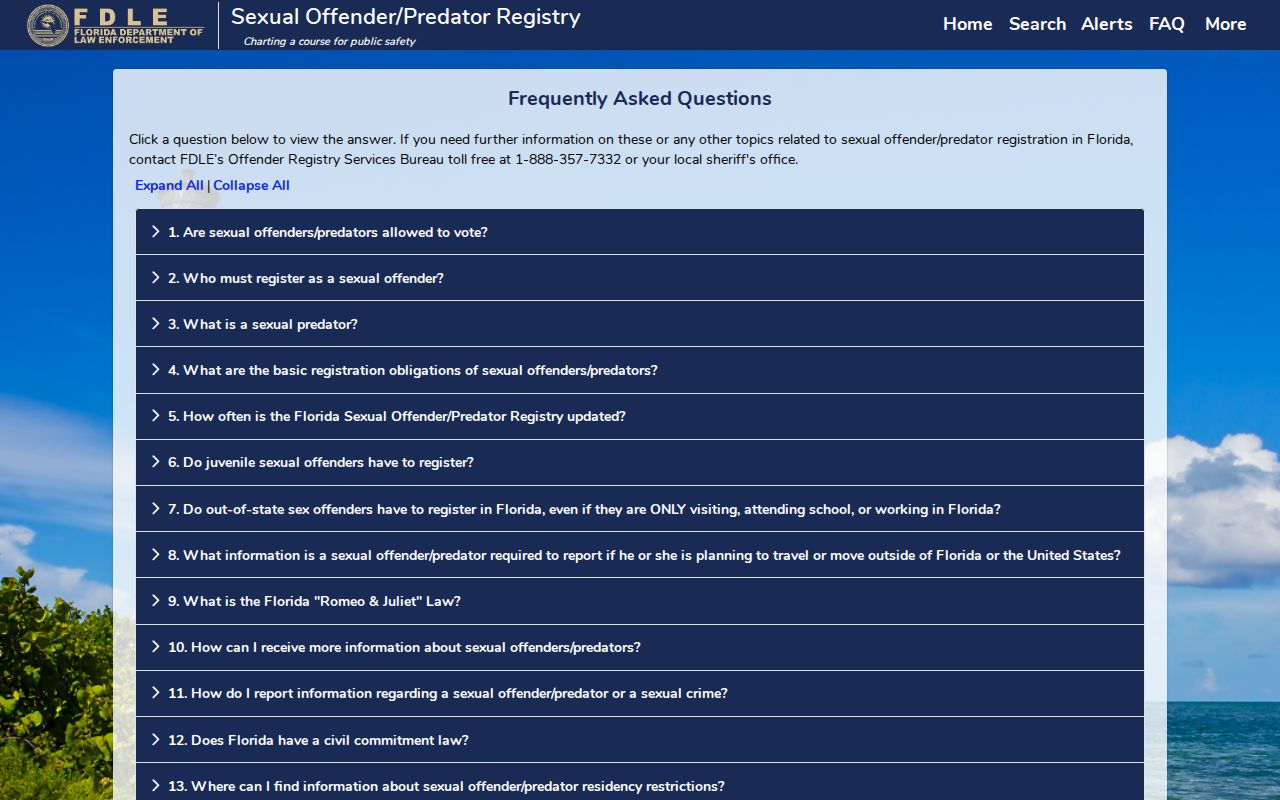
If an address seems wrong, do not confront anyone. Call FDLE at 1-888-357-7332 or JCSO so the proper agency can check it.
Confirm Jackson Registry Identity
A registry result should be matched with several identifiers. Compare the photograph, full name, aliases, birth information, physical description, reported location, and qualifying offense. One matching name is not enough. A person may have moved, used another name, or share basic demographic facts with someone else. Save the search date because a later verification can change the public entry.
Fingerprints are the sound method for positive identity. The public registry is not a fingerprint-confirmed search tool for the person running it. Someone reviewing their own broader Florida record can use FDLE Personal Review, which supplies a fingerprint-based subject-access and correction route. For the local conviction and sentence, compare the registry entry with the Jackson Clerk's case file.
If an address or identity fact seems wrong, contact FDLE or JCSO. Give the profile details and explain the specific conflict. Do not confront the person at the listed place or publish an accusation. Agency review is the lawful way to resolve possible noncompliance, stale information, or a mistaken match.
Inside a Jackson Registry Profile
A Florida profile is a registration record, not a full Jackson County criminal history. It combines identity data, statutory designation, reported locations, qualifying offense facts, and compliance information. A printable flyer condenses selected fields, but the live record is best when current status matters.
| Name and aliases | Primary and reported alternate names. |
|---|---|
| Photo and description | Image, birth facts, body description, and marks when reported. |
| Reported locations | Residence and other address types released by law. |
| Offense | Qualifying offense, jurisdiction, date, and case facts when available. |
| Designation | Sexual offender or sexual predator, legal labels rather than risk scores. |
| Status | Registration, verification, and absconded information where applicable. |
Read Jackson Offender Flyers Carefully
FDLE permits printing selected results, with a 25-record limit in that workflow. A flyer is useful for saving a dated result, but it may omit later court activity and facts the registry was never built to collect. Positive identity requires fingerprints. A photo and birth date can strengthen a match, yet demographic facts alone can still misidentify someone.
The official registry-search screen is the source for a current profile.
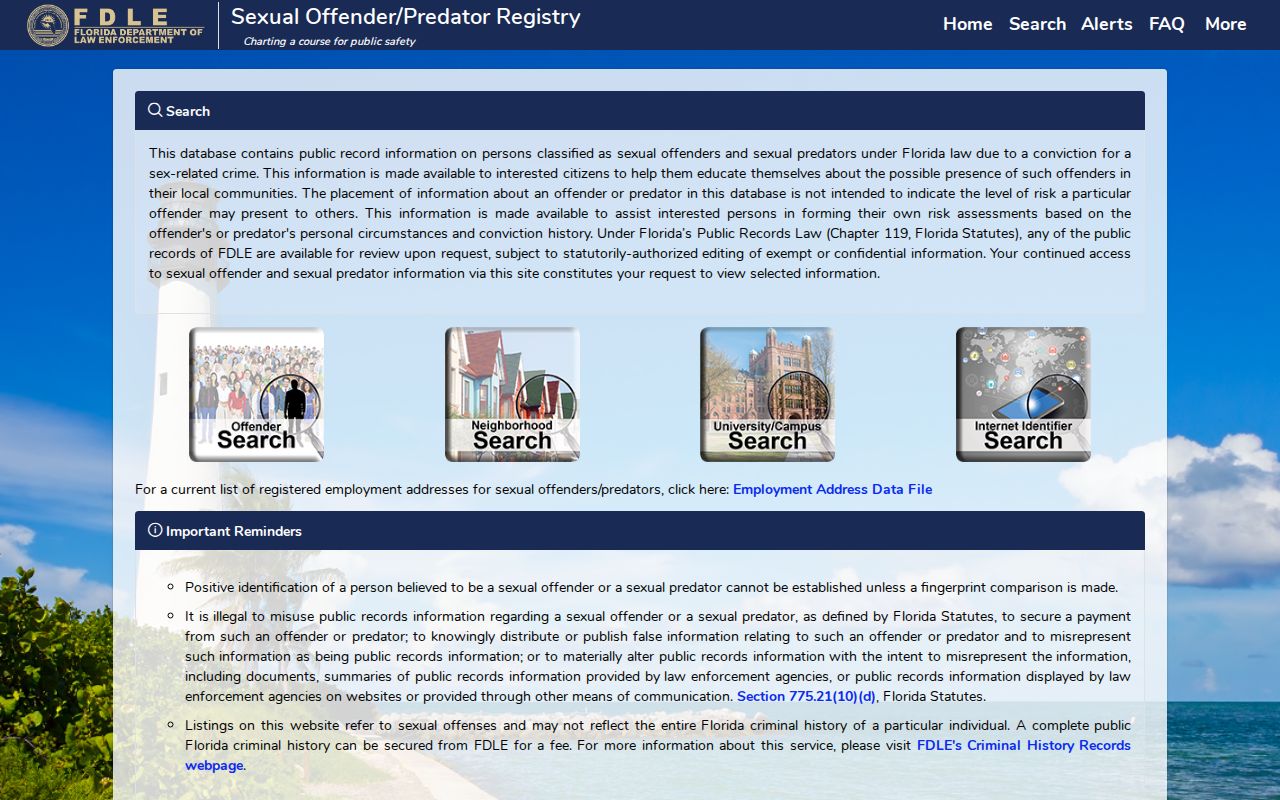
For one's own broader state record, FDLE Personal Review uses fingerprints. The Jackson Clerk remains the source for the local case disposition.
Florida Registration Levels and Requirements
Florida does not use a simple public three-tier risk scale. Its main statutory categories are sexual offender and sexual predator. Many duties last for life unless a legal removal path applies. Reporting can be quarterly or twice yearly. Confirm the controlling duty with FDLE and JCSO because no permanent Jackson County counter calendar was verified.
| Level / Tier | Duration | Verification Frequency |
|---|---|---|
| Sexual offender | Often lifetime, subject to law | Generally twice yearly, with exceptions |
| Sexual predator | Lifetime unless lawfully relieved | Generally quarterly |
| Special cases | Depends on offense and order | Confirm with FDLE and JCSO |
Jackson Residency Rules Need Verification
Florida has no one universal statewide distance buffer for every registrant. Statutes, supervision terms, local rules, and the controlling order can differ. No verified blanket Jackson County ordinance appeared in the official research. A map pin proves neither a violation nor an error. Check the person's controlling terms and ask the responsible agency.
Jackson's rural geography also makes state lines relevant. The National Sex Offender Public Website searches participating jurisdictions.
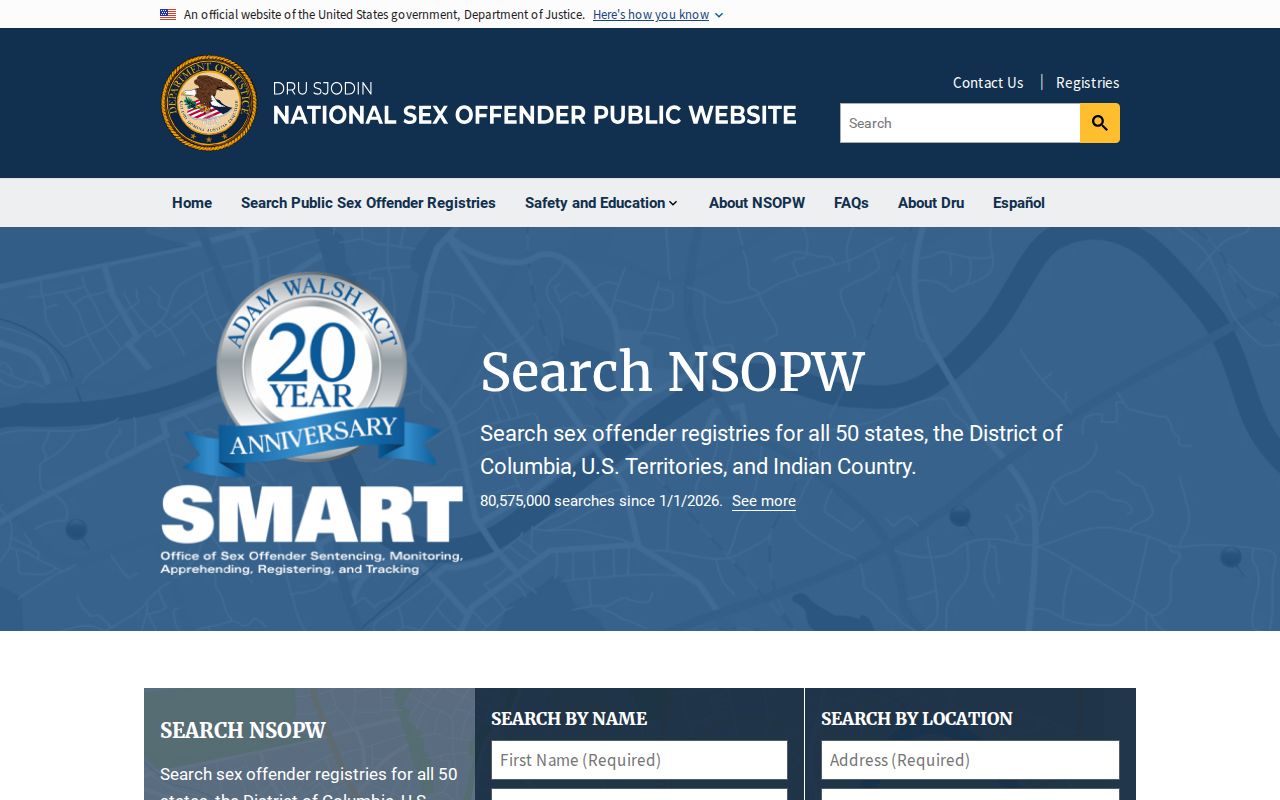
NSOPW adds a cross-state layer but does not replace FDLE for a Florida address.
Local Jackson Registry Questions
Registration questions belong with JCSO and FDLE, not a city web form. Marianna, Graceville, and Malone pages may help locate municipal contacts, but they are not separate offender registries. Malone's official contacts can still help a caller identify the right local office.
The Town of Malone site shows those public contacts.
Its history page also places the town near the Alabama line, which helps explain why a national search may be useful.
The official Malone history supplies that context.
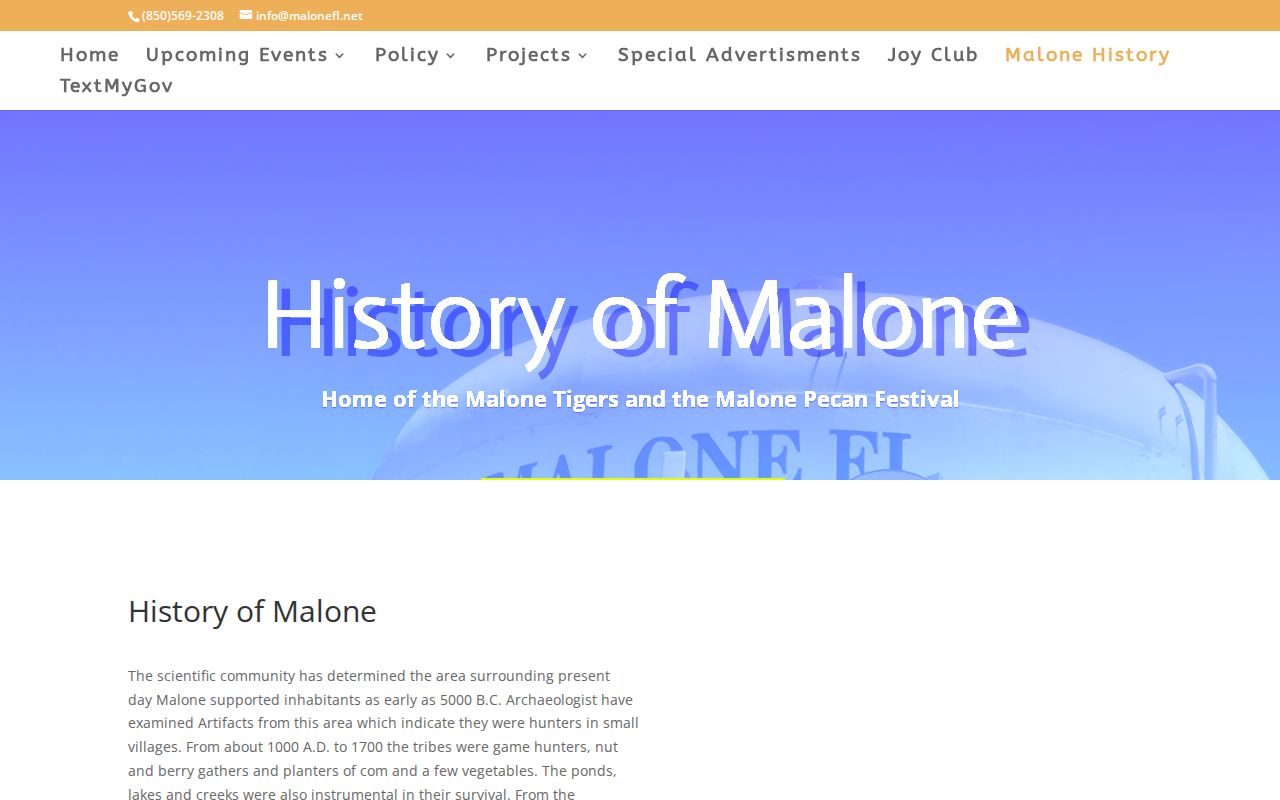
Local history does not change registry duties, but it clarifies the cross-border setting.
Community Notification and Lawful Use
Registry data supports family safety, neighborhood awareness, and lawful notification. Use it to understand an official status, save an alert, or report a factual concern. Do not harass a registrant, threaten a household, trespass, or spread claims that the profile does not make. FDLE warns that information can change, so verify against the current entry.
When a result affects a personal safety plan, separate confirmed facts from assumptions. Record the date of the search, open the profile rather than relying on a result card, and keep the source agency's contact information. Report suspected noncompliance through FDLE or JCSO. Emergency conduct belongs with 911, while a possible data mistake belongs with the registry hotline. Those routes give trained staff a chance to check the record and take lawful action.
Misuse is unlawful: Florida Statutes section 775.21 forbids misrepresentation and unlawful misuse; never harass, threaten, or intimidate a registrant or household.